If your spruce tree is suddenly shedding needles—especially from the inside or lower branches—you’re not alone. Across Massachusetts, homeowners are seeing the effects of needlecast, a common fungal disease that thrives in our wet spring conditions.
The good news: it’s treatable when caught early. The challenge is knowing what you’re looking at—and when to act.
What Is Needlecast (and Why It’s So Common in Massachusetts)?
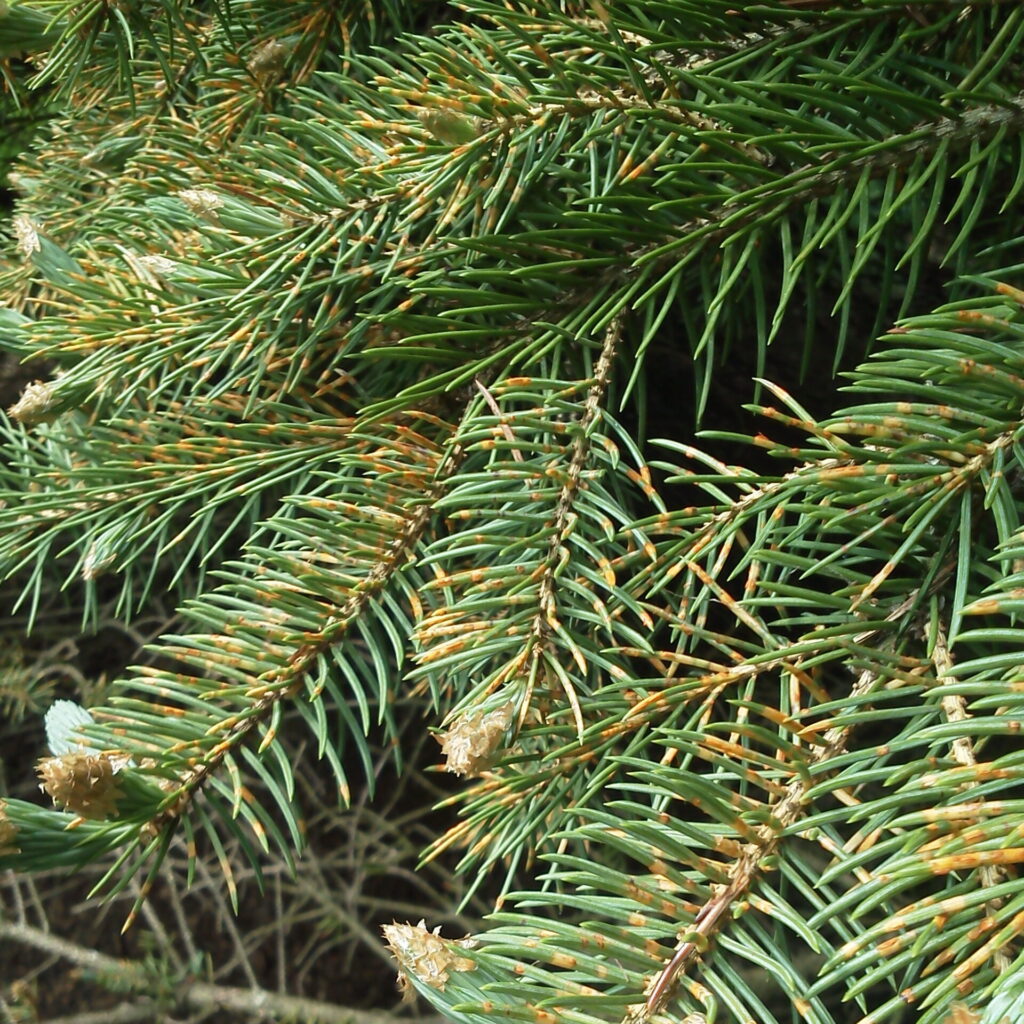
Needlecast is a fungal disease that affects spruce trees, causing needles to discolor and drop prematurely. In New England, it shows up frequently because of our cool, wet spring weather, which creates ideal conditions for fungal spores to spread.
According to field guidance, infections typically begin in late winter through early summer, when moisture allows spores to move from infected needles to new growth.
Spruce species like Colorado blue spruce are especially vulnerable in landscapes throughout towns like Lexington, Andover, and Concord.
Early Signs of Needlecast to Watch For
Needlecast doesn’t usually start at the tips—it works from the inside out.
Here’s what to look for:
- Inner needle drop (needles closer to the trunk falling first)
- Browning or yellowing needles, starting on lower branches
- Thinning canopy, especially from the bottom up
- Bare interior branches while outer tips still look green
In many cases, you may also notice tiny black dots on infected needles. These are fungal fruiting bodies.
Needlecast vs. Normal Needle Shedding
Spruce trees naturally shed older needles every year—but needlecast looks different.
Normal seasonal shedding:
- Occurs in fall
- Affects older, interior needles only
- Tree still looks full and healthy overall
Needlecast:
- Often noticeable in spring or early summer
- Starts low and spreads upward
- Leads to visible thinning and patchy browning
If your tree is looking sparse—not just dropping a few inner needles—it’s worth a closer look.
Why Timing Matters for Treatment
Timing is everything with needlecast.
Fungicide treatments do not fix damaged needles—they protect new growth from becoming infected. That is why spring applications are critical.
Typical treatment approach:
- Begin at bud break
- Apply 3 treatments spaced about 2 weeks apart
- Repeat annually for best results
Because infection happens early in the season, waiting until mid-summer often means missing the window to protect that year’s growth.
What Happens If Needlecast Is Ignored?
Left untreated, needlecast is progressive.
Over time, you may see:
- Increasing needle loss each year
- Thinner canopy and reduced screening or privacy
- Branch dieback
- Overall tree decline
While it is rarely an overnight issue, multiple years of infection can leave a spruce tree stressed and vulnerable to other problems.
Treatment vs. Removal: What Makes Sense?
Not every spruce needs to be removed—but not every tree is worth saving.
Treatment makes sense when:
- The tree still has good overall structure
- Needle loss is moderate, not extreme thinning
- You are willing to commit to a multi-year program
Removal may be the better option when:
- The tree is severely thinned or declining
- Large sections are bare or dead
- The tree no longer serves its purpose such as privacy or aesthetics
With proper health care, treated trees can recover—but it often takes 2 to 3 years to regain fullness.
Pro Tip: Don’t Wait for It to Get Worse
Needlecast is much easier—and more cost-effective—to manage early. If you are noticing unusual needle drop right now, you are already in the decision window for this season.
Work With a Local Team That Knows What to Look For
At Marquis Tree Service, we help homeowners across Billerica, Chelmsford, Westford, and surrounding towns diagnose and manage spruce issues with a clear, honest approach.
From accurate identification to properly timed treatments, our team focuses on protecting your trees while keeping you informed every step of the way.
Marquis Tree Service delivers reliable, safety-first tree care backed by clear communication, punctuality, and teamwork. From first contact to final clean-up, count on professional crews who put your property, your trees, and your experience first.
Ready for a Free Estimate?
If your spruce is dropping needles and you are not sure why, we can help you figure out the next step.
Call us today at 781-860-9618 or contact us online.