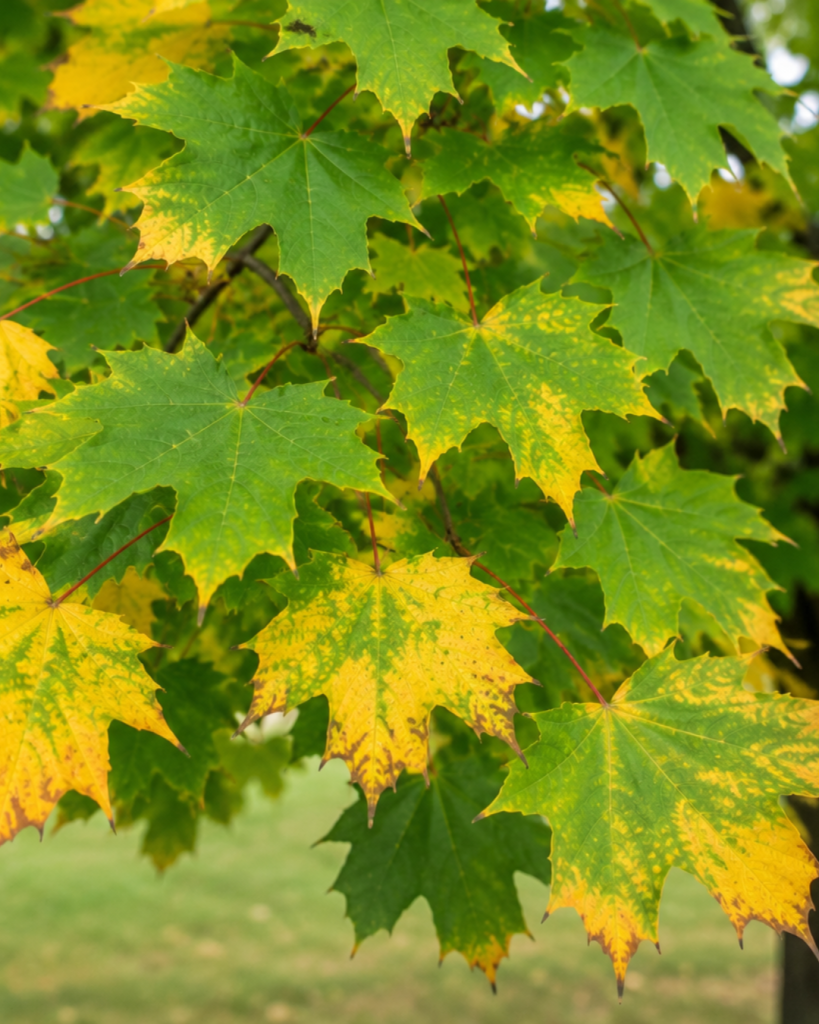
By July and August, many Massachusetts homeowners begin noticing something concerning in their landscapes: trees that looked healthy in spring are suddenly developing yellow leaves.
While some yellowing can be a normal part of a tree’s growth cycle, it can also be one of the first signs that a tree is under stress. Understanding the difference can help you determine whether your tree simply needs time—or whether it needs professional attention.
Why Yellow Leaves Are Common During Summer
Summer places significant demands on trees. Higher temperatures, increased water needs, compacted soils, and environmental stress can all affect a tree’s ability to produce and maintain healthy green foliage.
Trees rely on chlorophyll—the pigment responsible for green leaves—to produce energy through photosynthesis. When a tree experiences stress, chlorophyll production can decline, causing leaves to turn yellow.
This yellowing is often most noticeable during periods of prolonged heat or limited rainfall, both of which are common during Massachusetts summers.
Normal Yellowing vs. Tree Stress
Not every yellow leaf indicates a serious problem.
Some older interior leaves naturally yellow and drop as the tree redirects resources to newer growth. This process is usually limited to a small number of leaves and occurs evenly throughout the canopy.
Signs that yellowing may be stress-related include:
- Large sections of the canopy turning yellow
- Yellow leaves appearing on branch tips
- Premature leaf drop
- Wilting or curling leaves
- Thinning foliage
- Yellowing concentrated on one side of the tree
If multiple symptoms are present, further evaluation is often warranted.
Common Causes of Yellow Leaves in Massachusetts Landscapes
Drought Stress
One of the most common causes of yellow leaves during July and August is insufficient soil moisture.
Even mature trees can struggle during extended dry periods. Trees growing in lawns often compete with turfgrass for water, while recently planted trees may not yet have established extensive root systems.
Signs of drought stress may include:
- Yellowing leaves
- Browning leaf margins
- Wilting foliage
- Premature leaf drop
In many cases, drought stress can persist even after rainfall because compacted soils prevent water from reaching the root zone.
Soil Compaction
Construction activity, foot traffic, heavy equipment, and years of lawn use can compact soil around trees.
Compacted soil reduces oxygen availability and limits water infiltration, making it difficult for roots to absorb essential nutrients and moisture.
Trees experiencing soil compaction often develop symptoms including:
- Chlorotic (yellow) leaves
- Reduced growth
- Thin canopies
- General decline
These symptoms are common indicators that a tree may benefit from soil improvement treatments.
Nutrient Deficiencies
Trees require essential nutrients such as nitrogen, iron, and manganese to maintain healthy foliage.
When these nutrients become unavailable, leaves may begin to yellow even if adequate moisture is present.
This is particularly common in urban and suburban landscapes where soil quality has been altered by construction or years of disturbance.
Root Damage
Tree roots often extend far beyond the canopy. Excavation, trenching, driveway installation, utility work, and grade changes can damage roots without homeowners realizing it.
Because roots are responsible for absorbing water and nutrients, damage frequently appears first in the canopy as yellow leaves, thinning foliage, and reduced vigor.
Is It Chlorosis?
One common cause of yellow leaves is chlorosis.
Chlorosis occurs when leaves fail to produce sufficient chlorophyll, often due to nutrient availability issues rather than an actual lack of nutrients in the soil.
Common symptoms include:
- Yellow leaf tissue
- Green leaf veins
- Stunted growth
- Thinning canopy
Certain species are especially prone to chlorosis, including sugar maples. Marquis Tree Service frequently sees chlorosis associated with soil pH issues, environmental stress, construction impacts, and aphid activity on sugar maples.
Unlike many diseases, chlorosis often appears uniformly throughout portions of the canopy rather than in isolated patches.
Could Insects or Disease Be Causing Yellow Leaves?
Sometimes yellow leaves are linked to insect activity or disease rather than environmental stress.
Several common Massachusetts tree problems can produce yellowing symptoms, including:
- Spider mites
- Aphids
- Apple scab
- Cedar apple rust
- Beech Leaf Disease
- Needlecast on spruce trees
For example, apple scab often causes infected leaves to yellow and drop prematurely by mid-summer, while Beech Leaf Disease can produce yellowing and distorted foliage.
A professional inspection can help determine whether the cause is environmental, nutritional, insect-related, or disease-related.
Which Trees Commonly Show Yellowing Symptoms?
Several tree species in Massachusetts frequently exhibit yellow leaves during summer, including:
Maple Trees
Maples are particularly sensitive to drought stress, soil compaction, and nutrient imbalances.
Birch Trees
Birch trees often display yellowing when stressed by drought, poor soil conditions, or insect activity.
Beech Trees
Beech trees may develop yellowing foliage due to Beech Leaf Disease or root stress.
Crabapple Trees
Diseases such as apple scab frequently cause yellowing and premature leaf drop.
Spruce Trees
Needle yellowing can indicate needlecast disease, drought stress, or other health concerns.
Can Deep Root Fertilization Help?
In many situations, yes.
Deep root fertilization is designed to improve soil conditions and deliver nutrients directly into the root zone where trees can access them most effectively.
This treatment is commonly recommended for trees experiencing:
- Soil compaction
- Thinning foliage
- Chlorotic or discolored leaves
- Stunted growth
- Drought stress
- Construction-related stress
The goal is to improve soil health, strengthen tree resilience, and support long-term vitality.
It’s important to note that fertilization is not a cure-all. If yellowing is caused by severe root damage, advanced disease, or structural decline, additional treatments—or other recommendations—may be necessary.
How Homeowners Can Reduce Summer Tree Stress
There are several steps homeowners can take to support tree health during hot weather:
Water Deeply
Provide slow, deep watering during extended dry periods rather than frequent shallow watering.
Protect Root Zones
Avoid parking vehicles, storing materials, or conducting construction activities within the root zone.
Maintain Mulch
Apply 2–3 inches of mulch around trees while keeping mulch away from the trunk.
Monitor Changes
Watch for worsening symptoms such as canopy thinning, branch dieback, or widespread yellowing.
Schedule Tree Inspections
Early diagnosis often provides the most treatment options and helps prevent further decline.
When to Call an Arborist About Yellow Leaves
Yellow leaves are not always an emergency, but they should not be ignored when symptoms become widespread or persistent.
Contact an arborist if you notice:
- Large portions of the canopy turning yellow
- Leaf drop during midsummer
- Dead branches developing
- Yellowing that worsens despite watering
- Evidence of insect activity or disease
- Trees that have recently experienced construction impacts
A professional assessment can identify the underlying cause and determine whether treatments such as deep root fertilization, bio-hydration, pest management, or other plant health care services may be appropriate.
Concerned About Yellow Leaves on Your Trees?
Summer stress can develop quickly, especially during hot, dry periods. If you’re noticing yellow leaves, thinning canopies, or other signs of decline, an inspection can help determine what’s causing the problem and what steps may improve tree health.
Ready for a free estimate by one of our certified arborists? Call us today at 781-860-9618 or contact us online.
Marquis Tree Service delivers reliable, safety-first tree care backed by clear communication, punctuality, and teamwork. From first contact to final clean-up, count on professional crews who put your property, your trees, and your experience first.